Basketball is one of the fastest-growing sports in the United States and around the world. From neighborhood parks to massive NBA arenas, the basketball court is where all the action happens. Whether you’re a beginner learning the basics, a parent planning a backyard court, or a serious player trying to improve your game, understanding the basketball court is essential.
In this guide, we’ll break down basketball court dimensions, court markings, surfaces, equipment, indoor vs. outdoor courts, maintenance tips, and much more in simple conversational English.
What Is a Basketball Court?
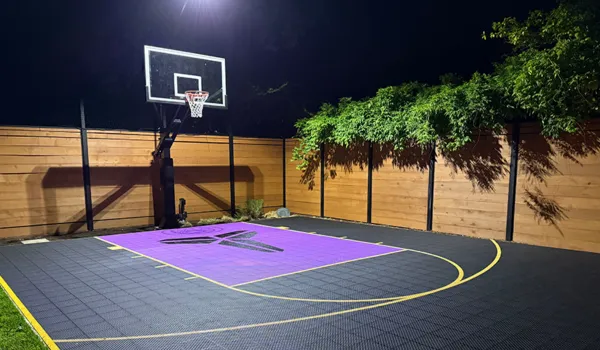
A basketball court is the playing surface used for basketball games. It contains specific lines, zones, hoops, and measurements designed to create a fair and organized game.
Every basketball court has:
- Two hoops
- Boundary lines
- A center circle
- Free throw lanes
- Three-point lines
- Key playing areas
While courts can vary slightly depending on the league or location, the overall layout stays mostly the same.
Standard Basketball Court Dimensions
The size of a basketball court depends on the level of play.
NBA Basketball Court Size
The official NBA court measures:
- Length: 94 feet
- Width: 50 feet
This is considered the professional standard in the United States.
College Basketball Court
NCAA courts use the same dimensions as NBA courts:
- 94 feet long
- 50 feet wide
However, some line measurements differ slightly.
High School Basketball Court
Most high school courts measure:
- 84 feet long
- 50 feet wide
Some schools may use smaller courts depending on available space.
Youth Basketball Court
Youth courts are often smaller to help younger players develop skills more comfortably.
Typical youth court sizes range from:
- 74 to 84 feet long
- 42 to 50 feet wide
Main Parts of a Basketball Court
Understanding the court layout helps players improve positioning, shooting, and game awareness.
Center Circle
The center circle is located in the middle of the court. Games begin here with the opening tip-off.
Three-Point Line
Shots made beyond this line count for three points instead of two.
NBA three-point distance:
- 23 feet 9 inches from the basket at the top
- 22 feet in the corners
The three-point shot has become one of the most important parts of modern basketball.
Free Throw Line
This line sits 15 feet from the backboard. Players take free throws here after certain fouls.
The Key or Paint
The painted rectangular area near the basket is called:
- The key
- The paint
- The lane
This area is important for rebounding, post moves, and defensive positioning.
Baseline and Sidelines
These lines create the court boundaries:
- Baselines run behind the baskets
- Sidelines run along the length of the court
Stepping outside these lines results in the ball going out of bounds.
Basketball Hoop Height and Measurements
The basketball hoop has remained mostly unchanged for decades.
Official Hoop Height
The rim is:
- 10 feet above the floor
This standard applies to:
- NBA
- NCAA
- High school basketball
Younger leagues may lower the rim for children.
Rim Diameter
The basketball rim measures:
- 18 inches in diameter
Backboard Size
NBA backboards measure:
- 6 feet wide
- 3.5 feet tall
Indoor vs Outdoor Basketball Courts
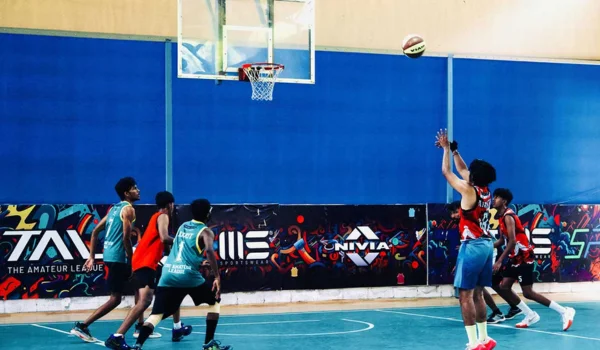
Not all basketball courts are built the same. Indoor and outdoor courts offer very different playing experiences.
Indoor Basketball Courts
Indoor courts are usually found in:
- Schools
- Gyms
- Arenas
- Recreation centers
Advantages
- Smooth hardwood surfaces
- Better ball bounce
- Cleaner environment
- Weather protection
- Professional feel
Common Flooring
Most indoor courts use:
- Maple hardwood flooring
Hardwood provides excellent grip and shock absorption.
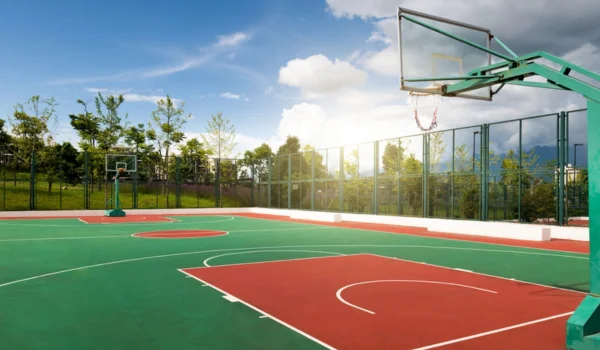
Outdoor Basketball Courts
Outdoor courts are extremely popular in parks and neighborhoods.
Advantages
- Free public access
- Great for casual games
- Good for conditioning
- Community atmosphere
Common Surfaces
Outdoor courts often use:
- Asphalt
- Concrete
- Sport tiles
These materials are durable but tougher on the knees and ankles.
Popular Basketball Court Surfaces
The type of surface affects gameplay, comfort, and safety.
Hardwood Courts
Best for:
- Professional basketball
- Indoor leagues
- School gyms
Pros
- Excellent traction
- Better shock absorption
- Smooth dribbling surface
Cons
- Expensive
- Requires maintenance
- Indoor use only
Concrete Courts
Best for:
- Public parks
- Outdoor recreation
Pros
- Durable
- Affordable
- Long-lasting
Cons
- Hard on joints
- Rough surface
- Can crack over time
Modular Sport Tiles
These interlocking tiles are becoming very popular for backyard courts.
Pros
- Easy installation
- Good traction
- Better cushioning
- Weather-resistant
Cons
- Higher upfront cost
- Needs proper base installation
Backyard Basketball Courts
More homeowners in the U.S. are building basketball courts at home.
A backyard court can:
- Improve fitness
- Help kids practice
- Increase property enjoyment
- Create family entertainment
Recommended Backyard Court Sizes
Half Court
Typical size:
- 30 x 30 feet
- 30 x 50 feet
Great for:
- Shooting practice
- 1-on-1 games
Full Court
Typical size:
- 94 x 50 feet
Requires a large property.
Basketball Court Lighting
Lighting is very important for evening games and safety.
Indoor Lighting
Indoor courts usually use:
- LED sports lighting
Benefits include:
- Lower energy use
- Better visibility
- Reduced glare
Outdoor Lighting
Outdoor courts need weather-resistant lighting systems with:
- Strong brightness
- Pole-mounted fixtures
- Proper angle positioning
Basketball Court Markings Explained
Every line on the court serves a purpose.
Half-Court Line
Divides the court into two sections.
Teams must move the ball across this line within a specific time limit.
Restricted Area Arc
Located under the basket.
Defenders standing inside this area cannot draw charging fouls in many leagues.
Free Throw Circle
Used during free throws to position players for rebounds.
Why Basketball Court Design Matters
Court design impacts:
- Player safety
- Game speed
- Skill development
- Spectator experience
Professional courts are carefully engineered for:
- Proper traction
- Ball response
- Injury prevention
Even recreational courts benefit from thoughtful design.
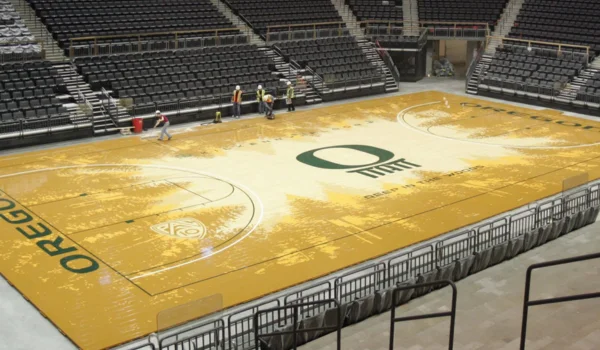
Common Basketball Court Colors
Basketball courts are no longer just plain wood or black asphalt.
Modern courts use:
- Team colors
- Logos
- Creative paint designs
Popular color combinations include:
- Blue and white
- Black and red
- Gray and green
- Natural wood finishes
Outdoor courts especially have become artistic community spaces.
Basketball Court Maintenance Tips
A well-maintained court lasts longer and provides a safer playing environment.
Indoor Court Maintenance
Regular Cleaning
Dust and dirt affect traction.
Floor Refinishing
Hardwood courts need refinishing every few years.
Moisture Control
Humidity can damage wood floors.
Outdoor Court Maintenance
Crack Repairs
Fix cracks early to prevent bigger damage.
Pressure Washing
Removes dirt and slippery buildup.
Repainting Lines
Fresh court markings improve visibility.
How Much Does a Basketball Court Cost?
Costs vary depending on:
- Size
- Surface type
- Indoor vs outdoor
- Customization
Basic Outdoor Court
Typical cost:
- $5,000–$15,000
Premium Backyard Court
Can range from:
- $25,000–$75,000+
Indoor Professional Court
May cost:
- Hundreds of thousands of dollars
Lighting, fencing, drainage, and custom logos all add to the cost.
Famous Basketball Courts in America
Some courts are legendary in basketball culture.
Madison Square Garden
Known as “The World’s Most Famous Arena,” it hosts major NBA games and historic basketball moments.
Rucker Park
One of the most iconic outdoor basketball courts in America.
Streetball legends have played here for decades.
Venice Beach Basketball Courts
These famous outdoor courts are known for their unique basketball culture and oceanfront atmosphere.
Basketball Court Safety Tips
Safety should always come first.
Wear Proper Shoes
Basketball shoes improve:
- Grip
- Ankle support
- Stability
Stay Hydrated
Especially important during outdoor summer games.
Check Court Conditions
Avoid slippery surfaces, loose rims, or cracked pavement.
Warm Up Before Playing
Stretching reduces injury risk and improves performance.
The Growing Popularity of Basketball Courts
Basketball continues to grow across the U.S. thanks to:
- NBA popularity
- Youth programs
- Social media highlights
- Community leagues
Cities are investing more in:
- Public basketball courts
- Indoor sports facilities
- Youth training centers
Backyard basketball installations have also surged in recent years as families prioritize active recreation.
Tips for Choosing the Right Basketball Court
If you’re planning to build or upgrade a court, consider:
Available Space
Measure carefully before designing.
Budget
Decide between basic and premium features.
Indoor or Outdoor
Climate and usage matter.
Surface Type
Choose comfort, durability, or professional feel.
Player Age
Youth players may need lower hoops and smaller courts.
Final Thoughts
A basketball court is much more than painted lines and hoops. It’s a place where athletes train, communities gather, friendships grow, and unforgettable moments happen.
Whether it’s a packed NBA arena, a school gym, or a neighborhood outdoor court, basketball courts remain the foundation of one of America’s most exciting sports.
Understanding court dimensions, surfaces, markings, and maintenance can help players, parents, coaches, and fans appreciate the game even more.
As basketball continues to evolve, the basketball court will always remain the center stage where passion, competition, and creativity come together.
About the Author